Beamish photography teaching session

Beamish photography teaching session

For anyone interesting in developing their photography skills then my Beamish Photography Teaching Session is for you.

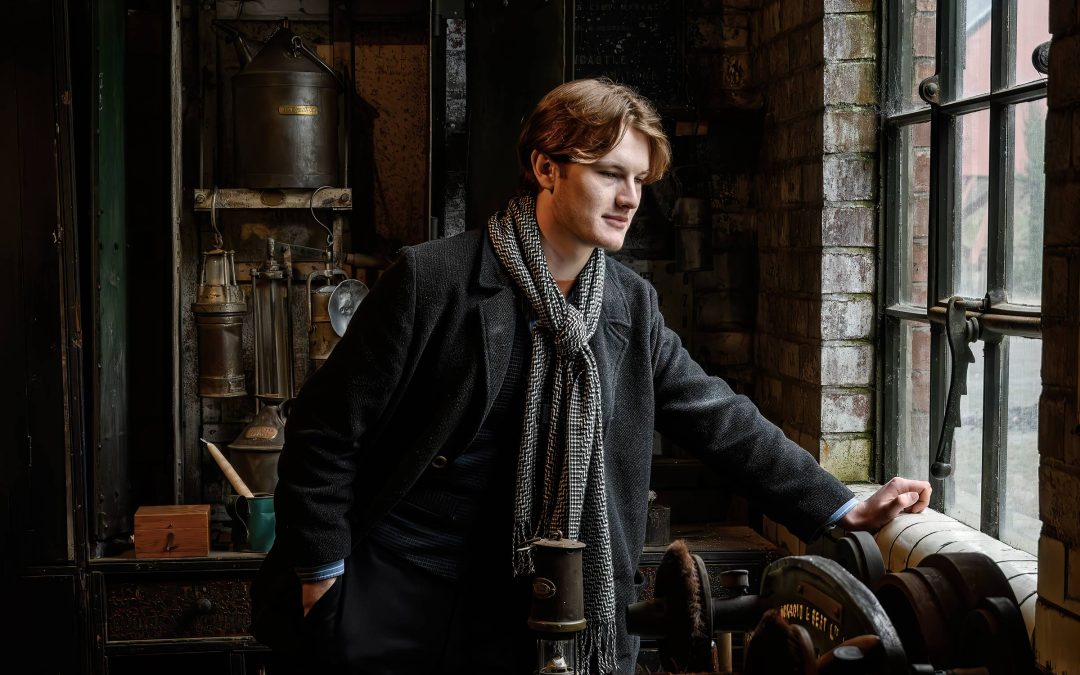
For anyone who loves people photography as I do there is honestly no better place to capture images which will be reminiscent of art inspired by artist such as Caravaggio.  The people in costume many who are volunteers are willing to pose in rooms which are also perfect in style.

It  is like stepping back in time.  Understanding how to set your camera correctly to capture images balanced between light and shade is not difficult and allows the use of natural light and window light to create stunning images.

So a group of 4 photographers will meet on at Beamish. We will spend around 40 mins working through a tutorial ensuring you will learn the best method of capturing beautiful images.  This will  cover both DSLR cameras and mirror-less cameras.  We will then work thought the site capturing images in multiple locations this will be for approximately 3 hours.  We will also take a break to discuss any concerns and resolve them.  One student who I guided through the process won the best image of the year from his camera club.

Video Link

Price per person £50

For more details about my Beamish photography teaching session please contact me via the website or my facebook page.


Wedding Photography Pressure what pressure part 2

Wedding Photography Pressure what pressure part 2

Wedding photography requires organisation and confidence. You need to know that having a plan is essential and know that everything might change on the day so be prepared!  

In terms of equipment, you will need a minimum of two cameras, both accessible quickly, I use a twin camera strap.  I have lots of memory card capacity and I recommend you have at least one speed-light and know how to use it indoors and outdoors.

So the big day is here. Make sure you have a copy of the schedule. Give yourself plenty of time to get to the venue(s) with enough time to check your locations on site before the guests arrive. Check with venue staff that there are no last-minute changes or issues. 

Generally, British weddings will begin with images of the bride getting ready. If you are working with the bride during preparation, try to capture natural interaction the giving of gifts etc. There can be some very poignant moments before the wedding. This will be an opportunity to remind the bride and bridesmaids to walk slowly down the aisle and not to get too close together so that you can photograph them individually. If there’s time, get them to stand in formation so as to rehearse the procession. You might get a good shot and you might be helping their nervous excitement as well.

At this time look out for small items and mementoes that mean a lot to the bride, bridesmaids and family. Jewellery, tokens attached to the bride’s bouquet, cards or family pictures, items of clothing. Don’t miss capturing these important emotional details. Get important images.  The last capture and so important is the father seeing his daughter in her dress, ready to leave for the service or ceremony.


If the bride is not getting prepared at the service location, you need to drive between the two locations and arrive there first.  Sacrifice photographing the bride getting into the car with her father. You need to be well ahead of them to arrive at the wedding venue, get parked and be ready for their arrival. 


If you are working on your own then then expect family and friends to be already seated waiting for the bride to arrive.  Say hello to the vicar or celebrant again and check they are still ok with where you will be to take the pictures. 

With two photographers, capturing the people arriving for the service, the groom waiting and the bride preparing to walk down the aisle is easy but if you’re on your own this can still be achieved (with the exception of people arriving) as long as you communicate with all involved.  You must be in position when the service takes place waiting for the bridesmaids the bride to make their entrance. Make sure some of these images also capture the groom waiting then looking round, he will. You need to get yourself into the shooting position and ensure your camera is straight in a combination of landscape and portrait orientations.  It’s a real shame if you need to crop these images.  


You should be allowed to have a central position to capture the bridal procession and that you can (if possible) move to the left side of the room from your perspective looking at the couple. This will mean you are getting the brides face more directly than the grooms.  

Trust me she is more important.  With same sex couples positioning is less critical but make sure you are in the best position for light. If you are faced with a room where windows are on one side only.  In this situation shoot from the window side to avoid silhouettes.  its best generally working with room light only for the service.

During the service when everyone is asked “does anyone down of any reason why the couple should not be joined in matrimony etc”  be ready for smiles this is special.  

When the rings are placed on their fingers try to get a close shot of this important moment but do not move close. Ideally have your second camera with a long lens or even crop to capture this part of the service. 

Remind the couple that the ‘first’ kiss needs to linger a little while to ensure you don’t miss it or even worse you get the shot of them coming apart a split second after the kiss.


After the service let everyone have that little drink and relax and be there to capture these moments.  Find a location to make a channel of people on both sides. Place colourful ladies’ outfits (yes, the ladies will be in them) at the front and do the confetti shot if there is a wind make sure that it is mostly being thrown so it does blow at the couple.   Always give that last couple a good handful of confetti and ask them to wait until you tell the couple to kiss at the end of this little walk before showing them with it. 

Now you need to nail the group shots. Start with the full party. Hopefully you have found a second-floor balcony or position where you can shoot down on the party.  Or get them to assemble on stairs so you can see all the faces.   Allowing the guests to relax and mingle, move on to the couples list. Working with the nominated family member or friend who knows everybody in the party should get the full set captured in around 30 minutes. This part of the shoot will lead to small group images and it’s important to have poses that can make everyone relax and smile.  You will need to communicate and provide guidance quickly so that the group does not lose confidence or patience. Be prepared with poses ready to share.

Throughout the time you are with the wedding guests you will be capturing the reportage – documentary – fly on the wall images.  This can be so important, often you are capturing people and angles that the couple will not see.  This part of your shoot can deliver something really special and it’s a good idea to keep looking around in anticipation for a shot that you may have missed if your eye does not leave the camera.  This is where good assistance can be helpful. You need to strike a balance between the informal gatherings and the formal poses, ensure there is a time to capture the group(s) in this way. Keep an overall awareness of how the whole group is interacting. 

After the group shots, throwing the bouquet or confetti (if it’s allowed) can give everyone a laugh they will then go into the speeches smiling.  I provide a plastic bouquet so that the bride does not have to throw something that may be special.  If they are up for it, the bride can also throw the bouquet for the men. This is always fun and can turn into a rugby scrum.


We are now at the point where everyone moves into the room for food and speeches. It is generally at this point when the couple enter the room for the food and speeches.  If you have completed the fun stuff above everyone will be smiling and feeling relaxed. You may feel you are in a good position to capture their entrance but remember everyone will be asked to stand as they walk into the room so ensure that your positioning is correct.  Often gifts are given to bride’s maids, parents etc so be ready to capture these moments.   Emotions can spill over so be ready to capture a combination of close ups and wide shots, this should also include reaction from guests.  When food is served, this is your cue to leave and have something to eat yourself. 

After everyone has eaten the room is generally going to be transformed for the evening set up.  This is the perfect time to separate the couple from the party for a portrait set, the bride and groom will often panic about time away from the guests so be ready to assure them that everyone is fine and is having a good old catch up.  With practice you can get this session down to half an hour. This additional 30 mins will not be a problem for anyone if the wedding plan for the day has built this in. 


I provide a posing guide if the couple are nervous and ask them to practice a couple only if they are willing then it can really relax them and things start to flow.


Next the evening and we are nearly there.  As discussed in the first blog post understand everything about the first dance sometimes it will explode with fireworks and a complete change in style and dynamics so understand everything, so you are ready. Occasionally the groom will finish with the bride cradled over backwards if this is happening position yourself in the right place.

Generally during the evening, the cutting of the cake is carried out.  To capture a colourful image get behind the cake and encourage everyone to come forward get the couple to pose cutting the cake with everyone behind them for a couple of shots Then move them to where you are so everyone can see the actual cutting of the cake.  This is always a lovely capture and well worth the trouble. 


Image delivery and what you promise.   I remember a few years ago how disappointed I was when the post office suggested a delivery date but then they failed, and it took twice as long to arrive.  However, If they had told me longer and the delivery was made in the same day, I would not have been disappointed.  Let’s apply this simple rule to image delivery. 

I always promise at least 40 images within 4 days and the full set within 6 weeks.  I always hit the first date and always provide more than 40 images.  Full delivery has never taken six weeks so couples are always really happy.  I hear often about photographers taking 6 months or more.  This suggests disorganisation and it’s clear to see why despite probably providing a great set of images the couple become frustrated. My final grain of advice is, find your own manageable delivery program and either hit it or better it (yes you knew that was coming). 


Teaching and image capture

If you are interested in my wedding course, it runs for a full day and will include working with a bride and groom to get used capturing something special.  You will also learn how to use a speed-light which in my opinion is essential.  Speed-light training can also be provided separately as a 2.5-hour session. If you would like to know more, please ring or email me for details.  

So simple summary 

  • Two cameras
  • lots of card memory 
  • speed-lights and a good supply of batteries 
  • visit the venue(s) 
  • get there early on the day 
  • know the schedule expect it to change
  • smile and enjoy the experience. 

hope this has been helpful 
Wedding Photography Pressure what pressure?

Wedding Photography Pressure what pressure?

Wedding photography part one.

Pressure what pressure?

I’ve been saying for a long time that I should write a blog about wedding photography.  After all these years, photographing weddings has become a big part of my professional life and I even run short courses in Wedding Photography to help others learn from my experiences. 

As I think about it, I realise that what I want to say falls into two categories. 

The planning and preparation and getting it right on the day and that both of those phases are fraught with pressure.

So I’m starting blog number one all about getting the planning right.

Why is there so much pressure?

Across the whole world every culture has ceremonies for two people making a life commitment to each. Since the early days of photography, people have chosen to capture images of their ceremonies, rituals and special moments. These images will become a vital part of their family life story, on display in their homes and shared with family and friends. The event is for the most part live, and the photographer truly gets just one shot on the day and it has to be the right one.

I covered my first paid wedding for a friend when I was 17 years old, in the days of film cameras and true image processing in my own domestic dark room. I’m certain that there was less pressure to produce something perfect and I worked alone. Today, many years later I really enjoy covering weddings and I fully understand the demanding aspects of the job, brilliantly supported by my wife Jeanette.

Wedding photography isn’t just about being talented, the photographer needs to have confidence to cover a wedding and some serious planning skills. 

I believe that the best planning starts by meeting the couple to find out exactly what they want from your photography and what they have planned for the day.  

To provide a complete service you are going to provide a combination of Tradition, Reportage (documentary) and Contemporary images. The couple will have their own ideas and it is their day, so explain the options then listen and take good notes. You want to get some agreement from them about who and what they want you photograph as well as the schedules and locations.


I have found it works best if they come to meet you to reduce any distractions. Don’t just dive straight in.  Start by getting a feel for their relationship. As an ice breaker, ask them how they met. This will help them to relax, feel comfortable and become quickly focused.   

A lot of couples today feel that formal traditional family shots are old fashioned, but it’s your job to explain that part of the photographers value is in documenting and reporting on the occasion so that by organising and agreeing certain shots in advance, they will end up with something important that records all the people they love with a mixture of family and friends who will probably never all be in the same place again.

Having agreed a list of shots, which you may need to prompt them to include often important elders for example, Grandads or Grandmas, to help this part of the shoot to flow very quickly, establish the services one of their more confident guests. This person will know the people attending and can help you to get them organised. By going through this process, you will also become aware of the family dynamics where relationships have changed, of loved ones have been lost. This knowledge can save awkward moments.


Now you have an idea what the couple require you can move on to your schedule planning.

Where at all possible, visit the venue ideally with the couple when they are meeting with site staff.  This is particularly important if it’s a venue you have never worked at before and it will ensure you know exactly where you are going on the day. Staff will tell you where photographers have captured the best images and you will be able to become familiar with both the building and ground layout. You can also research the venue’s website to see what other photographers have posted as locations around the site.


If you are covering a church wedding with a couple who expects everything about the service to be captured, you need to talk together with the couple and the vicar in advance to establish the views of the vicar and rules of the church on photography. This will save any awkwardness on the day. You might be able to join in the church rehearsal. At the rehearsal asked them to move well-spaced out and slowly in the processions and to let the ’first kiss’ linger a little, so that you can get a clear shot. A vicar once looked me straight in the eye and told me there was only one person here who is important and that is God!  In general, a civil ceremony tends to be more straight forward, permitting the photographer to roam around the venue. Typically, the registrar will say “it’s their day if I get in the way give me a push”.  Although it is no longer a legal requirement.  At the end of the ceremony some Vickers and Registrars often still ask you to wait until the signing is complete before taking photographs. It is important that you check with the vicar or registrar beforehand to establish when you can take the photographs and if you can get your posed shots after the legal document has been removed. 


Make a schedule of the day(s) events from hair and make-up to the evening party, to ensure you know exactly what is happening, when and where you need to be. If you are lucky you may be asked to cover rituals from other cultures and their preparations in the days leading up to the ceremonies and the relaxed activities afterwards. 

If the couple have rehearsed a dance ask to see a rehearsal video beforehand. If there are other evening performances or planned activities add them into your schedule.


Make sure you have a copy of the wedding plan with useful names and contact numbers for all the locations and key people. Anything that can go wrong, just might!

Map the locations and the check the routes to the venue(s) to eliminate traffic jams and road works. Allow more time than any Sat Nav recommends. The wedding will not wait for you if you are delayed. 

My Passage to India

My Passage to India

The aim for my blogs is to educate and entertain the groups of photographers and people I meet through teaching, organising events and taking photographs. I really enjoy helping people to take their best pictures and I do a lot of that through relating the stories and experiences that have helped develop my own practice.

This month I thought I would share how by chance and being flexible and building a good rapport with my subject, I got to explore another culture and their wedding traditions, make a new lifelong friend and expand my creativity for taking portrait photographs.

In 2010 I had just pulled together a new teaching session for photographers. I wanted to test out the approach to see if it worked, before I started running it for money, so I posted an advert offering this session for free.

I was contacted by a young man who was working at the dental hospital in Newcastle called Krunal Shar.  He had seen the advert and was sure there was a catch. He questioned me at length trying to work out how I would get money out of him. Somehow, I convinced him that there was no catch, and this led to one of the best experiences of my life.

When the session took place, my plan was to ask for a volunteer to be my model.  A stooge had already been assigned to this role and the idea was to say things to him to make him uncomfortable.  Example “can you do something interesting?”  After getting everything wrong, the group would then discuss how to do it right.  This seemed like a good idea and would also relax everyone.  The problem was that when I asked for a volunteer Krunal was in the seat like a shot.  While my stooge was still getting up, Krunal smiled and was ready to go.  

I knew I had to drop the comedy, turn the session plan upside down and just get on with the Photography. Krunal turned out to be a great subject and later he shared an image with his family. They were very impressed and not so long after that, I was on a flight to capture his wedding in Mumbai as the groom’s family photographer.  

An Indian wedding is a complex affair with many traditions and activities happening on set days. In 2010 I was privileged to spend 10 days in Mumbai capturing so many aspects of their festivities. On my first night I went onto the roof to photograph the family (a lot of family) learning their dance moves for wedding day three, when they would take their turn to perform on stage.  

I remember at the final day event Krunal and Druvika were on a large table upstairs having a main meal with close family. I sat down to eat on the floor below, happily soaking in all the colour and sights and being served wonderful food. It turns out I was supposed to be at the top table, so when they found me, I was guided to my seat to be served and fed again by a beautiful Indian lady, determined that I should eat more.  

After the wedding, the bride’s photographer took me up to a temple in the mountains where I was able to photograph a Hindu priest in the curious light and crumbling elegance of the setting.  Krunal and his lovely family showed me around other incredible places including the city of Mumbai and the Gateway of India.

On the plane home a man sitting next to me asked about the henna art I was proudly wearing on my arm and hand. He looked at me completely seriously and asked, “will you be able to wash it off?”.  At this point I knew the trip was over, although, The Evening Chronical did run an article recalling my memories called “Phil’s Passage to India”. The experience was mind blowing and so different to my English weddings. The colours the kindness shown by every single person I met during my stay gave me memories that will never leave me.  

I was so proud of the wedding pictures I had taken and the new friend that I had made for life. Krunal and I are still regularly in touch and when Covid is completely under control, my wife Jeanette and I will be going over to meet up with Krunal Druvick and of course their children. None of this would have happened if I had not taken the time to get to know someone at a shoot and create the right relationship to take the right photographs. Remember some of those moments might make you a friend for life.

A final note, I photographed Krunal’s Sister in an English church wearing a white wedding dress a couple of years after my trip.  She loved the idea of an English wedding!


Becoming A Portrait Photographer and some tips to share.

Becoming A Portrait Photographer and some tips to share.

As photographer I was 17 years old when I started getting paid for work. My subject interest has always been people.  It’s always amazed me that so many photographers could not see the attraction of portrait photography. I’ve known local photographers who would go out every weekend to photograph a sunrise and share images on the popular internet platform, ‘flickr’ then other photographers would be in raptures discussing a landscape or seascape image, the angles, the cloud formation, the rocks, in the sea motion.  Although I love interesting landscapes, my passion has always been for portraiture. I could not understand why the same photographers did not discuss an interesting face, the posture or movement of a person. I love portraiture because I know that a photograph can convey a mood or a hard to pinpoint emotion, a glance or a certain look and that these are moments which can be so easily influenced by the non-verbal exchange between the subject and the photographer.

Photographing people has many challenges. A landscape will never question the accuracy of its appearance or get nervous as you set up your camera. The seascape will never have an opinion about the image you took of it. People on the other hand are very engaged in the end product.  I have learnt that so many people simply do not like the way they look and no matter how accurate your image capture is they could be disappointed.  I once photographed a friend and jokingly (I hope) when she saw the picture she said “… if that’s how you think I look then we can’t be friends!” Yet taking a portrait can enable someone to see the amazing person they are and perhaps to see themselves from another point of view.

As a portrait photographer I find myself constantly looking at the interest and uniqueness in people’s faces and how they present themselves. A few years ago, I was driving to the beach at South Shields on the North East coast.  Riding a push bike, going in the opposite direction, was a man dressed all in black. He had a long beard and reminded me of images of Rasputin.  After a brief hesitation I turned my car around and asked him if he would allow me to photograph him. It turns out he had been living on the street and the local council had recently put him into a house on a street with mainly older people as his neighbours.  

I asked him to sit by his window so used natural light which fell across the left of his face casting the right of his face in to shadow. The result was an image of a man who was complex, private and with hard stories to tell about his life. The wonderful thing was he clearly did not regularly chat to anyone. As we talked, he completely forgot about my camera as I continued to take pictures, he told me about his life and the changes that had led him to living on the street.  In doing this he expressed so much emotion and mood changes, it taught me how important it is to take your time with portraiture when being creative. 

I took the black and white images back to Gordon to say thank you and am pleased to report that one year later he was working and rebuilding his life.  I am certainly not suggesting that our brief photography session had anything to with that, but I did capture part of his journey as he arose like a phoenix back into the world. 

When I am working on an organised shoot, a wedding, an event shoot or with a company that wants head shots for their website or print material, I am able to employ the many lessons learned with photographing people over the years. People in front of a camera continually surprise me. At an organised shoot, the subject might not stand out from the crowd in terms of clothing or style, but with the right support they can come alive and light up the space and provide wonderful images. 

I’ve put together a few great tips to help you to build a brief relationship with someone to get the best image of them.

  • I use good lighting to produce a flattering picture, whether soft, natural or professionally set.
  • I try to separate male and female subjects when I am organising a shoot so that my lighting set up only has to change once.
  • I never refer to the equipment or try to impress people with technical talk. I chat about things like the weather or their journey to my location.
  • I never ask them to ‘do something interesting’ (yes, some people have actually said that).
  • I always smile and aim to be supportive and positive, never look confused or unhappy with what I am doing no matter what is going wrong.
  • I always comment positively about the subject’s appearance.
  • I try to make contact “is it ok to just remove this fluff from your shoulder?” Socially acceptable touch is very calming and reassuring, make this gentle and non-judgmental. Always ask!
  • I always say, “my first few shots are just getting settings right so just relax don’t try to pose”. You can then say “these look great already this is going to be good”. 
  • I give positioning direction but keep it simple, e.g. “can you look at this point on the wall” or “straight at the light” or “straight at the camera”. One problem that often occurs when a subject is asked to look in a particular direction is that the angle brings their eye to the edge of the profile shot, giving me a view of a white eyeball. I keep a watchful eye (no pun intended) out for this and always correct the tilt of the head. 


  • I always ask “can you drop you chin slightly?”. People always want to hide their neck. 
  • I sometimes like to keep my subject stationary and move my own position to capture the right angle.
  • I always ask my subject if they have a favourite side of their face? Perhaps they have a blemish or issue about their appearance that concerns them. I do not use photoshop to remove permanent marks / moles etc. they make up the interest of the portrait, but I do use photoshop to remove temporary marks like cold sores etc. 
  • I ask (mostly women) in advance of the shoot, to avoid wearing too much makeup and ensure the product does not contain a metallic base which will reflect.
  • I try to avoid queues at corporate photography shoots. There is rarely enough time to really settle a subject, but it can really help if you avoid a line of people, one or a maximum of two at a time can work well.
  • I have learnt that photographing small children can be wonderful and best if you can get down to their height or eye level and be playful. With older children and young teenagers, you can tease a little bit, ask them if their mother is really their big sister and develop a rapport. You are on your way to a great child shoot.  

I do hope this has been of interest. Please use my contact page if you would like to learn more about portrait photography perhaps by joining a class or by being part of the event photography group.